
Post
Buying LandBest Places to Buy Property in Nyeri
Best Places to Buy Property in Nyeri
 Choosing the best place to buy property in Nyeri depends on what the buyer wants to achieve. Nyeri is not one single property market. It is a collection of town estates, peri-urban growth corridors, agricultural zones, roadside trading centres, institutional neighbourhoods, tourism-facing areas, and family settlement locations. A buyer looking for a residential plot near town will judge value differently from someone buying land for farming in Kieni, a rental unit site near a college, a retirement home in Tetu, a shop plot in Karatina, or an investment parcel along a major road. The safest approach is to match the area with the purpose, the budget, the legal status of the land, and the realistic development potential.
Nyeri has a strong property identity because it sits in the central highlands, with access to Mount Kenya, the Aberdare ranges, agricultural production zones, busy market towns, education institutions, county services, hospitality businesses, and transport routes that connect the county to Nairobi, Nanyuki, Murang’a, Kirinyaga, Laikipia, and Nyandarua. This gives buyers many options, but it also creates confusion. Some places are better for quick occupation, others for long-term appreciation. Some are strong for rentals, others for farming. Some are good for commercial frontage, while others are better for quiet living or family homes.
This guide explains the best places to buy property in Nyeri by buyer type and location. It covers Nyeri town and its surrounding estates, King’ong’o, Ruring’u, Kamakwa, Skuta, Kiganjo, Chaka, Karatina, Othaya, Mukurwe-ini, Tetu, Mweiga, Naromoru, Kieni, and other practical areas to consider. It also explains what makes each location suitable, what risks to check, and how to avoid buying land or property in an area that does not match your goal.
Choosing the best place to buy property in Nyeri depends on what the buyer wants to achieve. Nyeri is not one single property market. It is a collection of town estates, peri-urban growth corridors, agricultural zones, roadside trading centres, institutional neighbourhoods, tourism-facing areas, and family settlement locations. A buyer looking for a residential plot near town will judge value differently from someone buying land for farming in Kieni, a rental unit site near a college, a retirement home in Tetu, a shop plot in Karatina, or an investment parcel along a major road. The safest approach is to match the area with the purpose, the budget, the legal status of the land, and the realistic development potential.
Nyeri has a strong property identity because it sits in the central highlands, with access to Mount Kenya, the Aberdare ranges, agricultural production zones, busy market towns, education institutions, county services, hospitality businesses, and transport routes that connect the county to Nairobi, Nanyuki, Murang’a, Kirinyaga, Laikipia, and Nyandarua. This gives buyers many options, but it also creates confusion. Some places are better for quick occupation, others for long-term appreciation. Some are strong for rentals, others for farming. Some are good for commercial frontage, while others are better for quiet living or family homes.
This guide explains the best places to buy property in Nyeri by buyer type and location. It covers Nyeri town and its surrounding estates, King’ong’o, Ruring’u, Kamakwa, Skuta, Kiganjo, Chaka, Karatina, Othaya, Mukurwe-ini, Tetu, Mweiga, Naromoru, Kieni, and other practical areas to consider. It also explains what makes each location suitable, what risks to check, and how to avoid buying land or property in an area that does not match your goal.
How to Judge the Best Property Location in Nyeri
The best place to buy property in Nyeri is not always the cheapest location, the most advertised area, or the place where everyone seems to be buying. A good property location should have a clear purpose, usable access, realistic demand, legal safety, future growth potential, and infrastructure that supports the intended use. Before choosing an area, a buyer should ask whether the property is meant for living, renting, farming, business, speculation, resale, retirement, student accommodation, family settlement, or mixed-use development. For residential property, the strongest factors are security, road access, water, electricity, drainage, schools, hospitals, shopping points, noise level, and distance from town. For rental property, the key question is tenant demand. A rental site near a college, hospital, government office, transport stage, factory, market, or town centre may perform better than a beautiful plot in a quiet area with few tenants. For commercial property, frontage, traffic, visibility, parking, and zoning matter more than scenery. For agricultural land, soil, rainfall, altitude, water, slope, and road access for farm produce are more important than proximity to town. A buyer should also consider the stage of growth. Mature areas such as established town estates may have better services but higher prices and smaller plots. Emerging areas may offer larger parcels and lower entry costs, but they may lack reliable roads, drainage, sewer, water, or immediate rental demand. Rural areas may offer peaceful settlement and farming potential, but resale may be slower unless the land has strategic value. The right choice depends on whether the buyer wants immediate use, long-term growth, monthly income, or capital preservation.Nyeri Town: Best for Convenience, Rentals, Offices, and Urban Living
Nyeri town remains one of the most important places to buy property in the county because it is the administrative, commercial, educational, and service centre. Buyers who want convenience, tenant demand, business visibility, and quick access to public services often start here. Property close to the town centre may suit apartments, offices, shops, hospitality use, clinics, professional services, hostels, and mixed-use buildings, depending on planning approval and available space. The main advantage of Nyeri town is demand. People come to town for government services, schools, shopping, hospitals, transport, jobs, banking, legal services, hospitality, and professional work. This creates demand for rental rooms, bedsitters, one-bedroom units, small offices, shops, guest accommodation, and food businesses. For an investor, town property may provide stronger cash flow than rural land, especially where the plot has access, visibility, and approval for income-generating development. However, town property is usually more expensive. Plots may be smaller, competition is higher, and development standards may require more capital. A buyer must also check zoning, building approvals, drainage, parking, access, existing rates, ownership history, and whether the land is freehold, leasehold, or subject to restrictions. Some town properties may have old allotment issues, succession complications, tenant occupation, boundary disputes, or unpaid county rates. Therefore, a town plot should never be bought casually simply because it is near the central business district. Nyeri town is best for buyers who want urban rental income, professional premises, commercial property, apartments, shops, guest rooms, or a home close to services. It may not be ideal for buyers seeking large affordable land, quiet farming space, or low-cost family settlement. The buyer should budget carefully because the purchase price is only one part of the investment. Construction costs, approvals, rates, design, parking, and compliance may significantly affect the total cost.King’ong’o: Best for Residential Growth and Middle-Class Housing
King’ong’o is one of the most attractive residential areas for buyers who want to stay near Nyeri town without living directly inside the busiest sections. It is widely known as a growing residential zone with appeal to families, professionals, and investors interested in owner-occupied homes, rental houses, maisonettes, and controlled residential development. Its location makes it convenient for people working in town while offering a more settled neighbourhood feel than the central business district. The area is suitable for buyers looking for residential plots, family homes, modern rentals, and long-term capital appreciation. Demand is supported by proximity to town, access to services, and the general movement of households towards more organised peri-urban living. A buyer targeting middle-income tenants may find King’ong’o more practical than remote land because tenants want accessibility, security, water, electricity, and transport. For homeowners, the area offers a balance between convenience and privacy. King’ong’o is also a sensible area for buyers who want to build gradually. Compared with a prime central plot, a residential plot in a strong peri-urban neighbourhood may give the owner more space for a home, parking, small garden, servant quarter, or rental extension. However, because the area is already known, prices may not be as low as in distant emerging zones. Buyers must compare plot size, road access, estate character, drainage, security, and title status before committing. Important checks in King’ong’o include whether the road is public, whether the plot has proper beacons, whether water and electricity are nearby, and whether the estate has any restrictions on building style or use. A buyer should also avoid plots where the access road is only promised verbally. For rental investors, the likely rent should be compared against construction cost before buying. A good-looking plot is not automatically profitable if the expected rent cannot justify the total investment.Ruring’u and Kamakwa: Best for Town-Adjacent Living and Rental Demand
Ruring’u and Kamakwa are practical areas for buyers who want town-adjacent property. They are attractive because they sit close enough to Nyeri town to support daily movement, yet they are not necessarily as dense or expensive as the most central zones. These areas can work well for residential homes, rental houses, small apartments, and long-term family property. They may also suit buyers who want easy access to town without the pressure of a central commercial location. For rental investment, the strength of Ruring’u and Kamakwa depends on the exact road, neighbourhood, plot size, water availability, security, and distance to public transport. A plot that is walkable or easily accessible from transport routes may perform better than one hidden deep inside an area with poor road conditions. Students, workers, young families, and small households often prefer areas that reduce transport cost while still offering a quieter residential environment. For owner-occupiers, these neighbourhoods can offer a comfortable balance. A family can live near schools, hospitals, shops, churches, and town services while avoiding the busiest commercial streets. Buyers should compare the older and newer sections carefully. Some sections may have established homes and services, while others may be changing rapidly through subdivision and rental construction. This can affect privacy, noise, parking, drainage, and future density. The main caution is that town-adjacent areas often attract mixed development. A quiet plot today may later be surrounded by rentals, workshops, shops, or high-density housing depending on planning and market pressure. Buyers should walk around the neighbourhood and study the direction of development before purchasing. It is also wise to check rates, access, boundaries, and title history because older town-adjacent properties may sometimes have inherited ownership issues.Skuta and Nearby Growth Corridors: Best for Affordable Urban Expansion
Skuta and nearby growth corridors can appeal to buyers looking for relatively affordable entry into Nyeri’s urban expansion. These locations may attract people who want residential plots, starter homes, small rental developments, or land that still has room for appreciation as services improve. The appeal comes from being linked to town movement while sometimes offering lower prices than fully mature estates. For a buyer with a limited budget, an emerging area can be attractive because the cost of entry may be lower. However, the buyer must not look at price alone. The true value depends on access, water, electricity, drainage, terrain, security, legal status, and how quickly the area is likely to develop. A plot that is cheap but has no reliable access or water may become expensive after the buyer tries to build. A plot that seems remote today may become valuable if roads, services, and settlement grow around it, but this takes patience and careful judgement. Skuta and similar expansion zones may suit buyers who are not in a hurry to build luxury property but want to secure land before prices rise further. They may also suit small-scale landlords who want to build gradually according to demand. The buyer should study nearby development: Are people building permanent houses? Are rentals occupied? Is transport available? Are shops and schools nearby? Is security improving? Are roads being opened or maintained? These signs indicate whether an area is turning from speculative land into a functioning residential market. The biggest risk in emerging locations is buying into hype. Some plots are marketed as “next big thing” areas before there is enough demand to support the price. A buyer should compare actual completed houses and occupied rentals, not only broker promises. If buying for resale, check whether there is real buyer demand or only seller excitement. A good investment should be supported by practical growth, not rumours.Kiganjo: Best for Road Access, Institutions, and Long-Term Growth
Kiganjo is strategically placed along important movement routes and has institutional and residential relevance. It can suit buyers interested in property outside Nyeri town but still connected to transport and services. Kiganjo may appeal to homeowners, rental investors, people looking for roadside plots, and buyers who want a location with long-term growth potential driven by movement between Nyeri, Nanyuki, Karatina, and nearby centres. The area can work for residential property because it is not too far from Nyeri town, yet it has its own identity as a centre. Buyers may consider Kiganjo for family homes, small rentals, roadside businesses, storage yards, service businesses, and future commercial use. Exact suitability depends heavily on whether the plot is near the main road, inside a residential pocket, near institutions, or in a more rural section. For commercial buyers, frontage and access are the main issues. A roadside plot may look attractive, but the buyer must check road reserve requirements, entry approval, drainage, parking, and whether the intended business is allowed. For residential buyers, noise, dust, traffic, and future road expansion should be considered if the land is too close to the highway. A plot set slightly away from the main road may offer a better living environment while still benefiting from access. Kiganjo is best for buyers who want a growth-oriented location rather than a purely quiet rural property. It can also be attractive for people who believe in the long-term strength of the Nyeri-Nanyuki corridor. However, a buyer should verify the title, physical parcel, access road, and planning suitability. As with any corridor market, some sellers may price land based on future expectations rather than current value, so comparison with recent local sales is important.Chaka: Best for Highway-Linked Investment and Emerging Commercial Potential
Chaka is one of the areas many buyers watch because of its position along a major route and its reputation as a growing centre. It can suit buyers looking for roadside investment, residential plots, commercial property, hospitality-related opportunities, and land that may benefit from traffic and future expansion. The area’s appeal is strongest where the property has clear access, clean title, practical frontage, and connection to services. For commercial investors, Chaka may offer opportunities in shops, food outlets, accommodation, service businesses, petrol station-related land, hardware, logistics, and other road-supported uses, subject to approvals and actual demand. For residential buyers, Chaka can provide a location that is not as congested as Nyeri town while still connected to movement routes. It may also attract people who work around Nyeri, Nanyuki, Kiganjo, or nearby agricultural and tourism zones. However, highway-linked land requires careful due diligence. A buyer must check road reserve, frontage rights, access approval, future road expansion, drainage, noise, and whether the plot is safe and practical for the intended development. A parcel advertised as “touching tarmac” may still have restrictions that reduce usable frontage. Buyers should also be cautious where subdivision plots are being sold rapidly. Confirm individual titles, mutation records, beacons, and whether the plot being shown is the exact plot on the document. Chaka is best for buyers who want growth potential and can wait for the area to mature further. It may not be the right choice for someone who wants immediate dense rental demand like a central town estate. The best Chaka purchase is one where the buyer has matched the plot to a realistic plan, not just bought because the area is talked about.Karatina: Best for Trade, Rentals, and Market-Driven Property
Karatina is one of the strongest commercial and market towns in Nyeri County. It is suitable for buyers who want property supported by trade, movement, business activity, and rental demand. The town’s commercial character makes it attractive for shops, rental rooms, apartments, storage, small hotels, offices, and market-linked businesses. Buyers interested in income-generating property should seriously study Karatina because it has a different energy from quieter residential areas. The strength of Karatina is its market function. A busy trading town creates daily movement, which supports tenants and business premises. People come in to buy, sell, work, transport goods, access services, and connect to other towns. This activity can increase demand for small rentals, commercial spaces, food outlets, accommodation, and service businesses. For investors focused on cash flow, Karatina may be stronger than land bought purely for speculation in a remote area. However, Karatina property can be expensive in prime spots. A buyer must check whether the purchase price makes sense compared with expected rent or business use. Commercial plots also require careful review of planning rules, parking, loading space, sanitation, drainage, access, rates, and future redevelopment potential. If buying an existing building, inspect the structure, tenancy records, approvals, arrears, and maintenance needs. A building that appears profitable may have hidden repair costs or difficult tenants. Karatina is best for investors who understand trade-driven property. It can also suit buyers who want residential rentals near busy services. The key is to buy based on actual demand, not only location name. A small, well-positioned property near movement and services may outperform a larger but poorly accessed parcel outside the town’s active zone.Othaya: Best for Family Homes, Retirement, Farming, and Stable Settlement
Othaya is attractive to buyers who want a settled environment, agricultural value, family homes, retirement property, and land connected to strong rural services. It is not always chosen for aggressive speculative buying, but it can be excellent for people who want practical land in a stable area. Othaya can suit residential settlement, farming, dairy, tea and coffee-related land, small rentals near the town, and family homes with access to schools, health services, markets, and community life. The appeal of Othaya is balance. It can provide a calmer living environment than the central town while still offering useful services. For buyers planning retirement, a permanent rural home, or a family base, Othaya may offer the right mix of climate, access, farming potential, and community stability. It may also suit buyers who want land that can produce food or support small-scale agribusiness while remaining close to social amenities. For investment, the best Othaya opportunities depend on exact location. Land near the town, roads, schools, hospitals, or trading centres may support rental units or shops. More rural land may be better for farming, homesteads, and long-term family use. A buyer should avoid treating all of Othaya as one market. A plot near a busy centre is different from a steep agricultural parcel in a quiet interior area. The main checks in Othaya include land succession, family consent, agricultural land consent, boundaries, access, and soil or slope suitability. In older settlement areas, family land may have complex histories. A buyer should confirm that all necessary parties are aware of the sale and that the seller has legal authority. For agricultural land, Land Control Board consent may be required. For farming, inspect the land during different weather conditions if possible.Mukurwe-ini: Best for Agriculture, Dairy, Rural Homes, and Value Buying
Mukurwe-ini is suitable for buyers interested in agriculture, dairy, rural settlement, family homes, and relatively value-focused land. The area has a strong agricultural identity and can appeal to people who want land for productive use rather than only urban speculation. Buyers considering coffee, dairy, vegetables, fodder, poultry, fruit trees, or mixed farming may find Mukurwe-ini worth studying carefully. One of the advantages of Mukurwe-ini is that buyers may find parcels that offer more practical land use than smaller town plots. For someone who wants a home with farming space, it can be more suitable than buying a tiny urban plot at a high price. It may also suit people who want to build a rural home while maintaining access to a town centre and local services. For investors, Mukurwe-ini may not always provide the fastest rental returns compared with Nyeri town or Karatina. However, it can offer value where the buyer’s plan involves farming, family settlement, retirement, or long-term land holding. The best purchases are near usable roads, water sources, trading centres, schools, and areas where agricultural activity is strong. Remote land may be cheaper but could be harder to develop, resell, or manage. Important due diligence includes title verification, family consent, boundary confirmation, agricultural land consent where applicable, water access, soil quality, slope, and road condition. Buyers should also check whether the advertised acreage matches the physical parcel and title records. In rural land transactions, boundary misunderstandings are common, so a surveyor’s input is valuable.Tetu and Wamagana Areas: Best for Quiet Living, Farming, and Scenic Homes
Tetu and nearby Wamagana areas can appeal to buyers who want quiet living, scenic surroundings, productive land, and a home environment away from the busiest urban sections. This side of Nyeri may suit people looking for family homes, retirement property, agricultural land, eco-style homes, small guest accommodation, or peaceful settlement with access to Nyeri town and surrounding services. The area’s appeal is often linked to its cooler highland character, agricultural activity, and calmer neighbourhood feel. Buyers who value space, privacy, and natural surroundings may prefer Tetu over more congested zones. It can also be attractive for people who want land for food production, dairy, tea, coffee, or mixed farming, depending on the exact location and altitude. For residential property, the buyer should consider road access, distance from town, water, electricity, security, slope, drainage, and construction cost. A scenic plot on a slope may be beautiful but more expensive to build on. A quiet road may be peaceful but difficult during rainy seasons if not well maintained. A parcel with excellent farming potential may not necessarily support rental income unless it is near a trading centre or institution. Tetu is best for buyers who value quality of life, farming potential, and long-term settlement. It may be less suitable for investors who need immediate high-density tenant demand. The buyer should be clear about the purpose. For a home and small farm, it can be excellent. For quick resale or monthly rentals, the exact micro-location matters much more.Mweiga: Best for Tourism Access, Agriculture, and Roadside Growth
Mweiga is attractive because of its position towards the Aberdare side and its connection to tourism, agriculture, and road movement. It can suit buyers interested in land for homes, farming, hospitality, roadside business, eco-tourism, and long-term investment. The area has a different feel from Nyeri town because it combines rural space, movement, scenic potential, and access to natural attractions. For buyers interested in hospitality or tourism-related property, Mweiga can be worth considering. The wider area links to travel routes, farms, lodges, nature experiences, and scenic landscapes. This does not mean every parcel is suitable for a lodge or guest facility. A buyer must check access, views, water, planning approval, security, road condition, and the actual tourism flow. A beautiful parcel without access or services may become costly to develop. For agriculture, Mweiga and surrounding areas may suit certain farming activities depending on soil, water, altitude, and rainfall. Buyers should not assume all land is productive simply because the region is known agriculturally. Visit the land, talk to neighbouring farmers, check water sources, and understand seasonal conditions. If buying for livestock, fodder, greenhouse farming, or horticulture, confirm whether the land size and water situation can support the plan. Mweiga is best for buyers who want space, natural surroundings, farming options, or tourism-linked potential. It may also suit people looking for land along growth routes. As with other roadside and rural areas, boundary verification, title checks, and access confirmation are essential. Buyers should also compare prices carefully because scenic or roadside descriptions can sometimes lead to inflated asking prices.Naromoru and Kieni: Best for Larger Land, Farming, Lifestyle Property, and Long-Term Holding
Naromoru and wider Kieni areas are suitable for buyers who want larger land, farming projects, lifestyle property, conservation-minded homes, roadside investment, or long-term holding. Kieni covers a large part of Nyeri’s land mass, which means it offers very different property conditions from the more densely settled highland areas. Some sections are closer to Mount Kenya routes, some are dry or semi-arid, some support farming with proper water planning, and others may be attractive for spacious settlement or tourism-related ideas. The biggest advantage of Kieni is space. Buyers who cannot afford large parcels near Nyeri town or Karatina may find more options in Kieni. This can be useful for farming, livestock, trees, holiday homes, storage, institutions, or long-term land banking. Naromoru may appeal to people interested in Mount Kenya access, tourism movement, and lifestyle property. However, the buyer must be practical because larger land is not automatically better. Water, road access, soil, security, climate, and management cost matter greatly. For farming, Kieni requires careful planning. Some areas may need irrigation or water harvesting. A buyer should check borehole potential, rivers, community water projects, rainfall, soil depth, and neighbouring farm performance. For livestock, check pasture, fencing, water, veterinary access, and market routes. For residential use, check distance to schools, hospitals, markets, and reliable transport. For tourism or holiday property, check accessibility, views, legal permissions, and whether there is a realistic customer base. Naromoru and Kieni are best for patient buyers with a clear land-use plan. They may not suit someone who wants immediate town-style rental income. Their value can be strong when the buyer understands the land, secures water, chooses good access, and buys at a sensible price. The buyer should be especially careful with boundaries because larger parcels can have unclear edges, grazing claims, old subdivisions, or access complications.Thunguma and University-Adjacent Areas: Best for Student and Staff Rental Potential
Areas near learning institutions can be attractive for rental investment because students, staff, suppliers, and service providers create housing demand. In Nyeri, university-adjacent and college-linked areas may support bedsitters, single rooms, hostels, small apartments, food businesses, cyber services, printing shops, salons, and other student-focused services. Thunguma and related institutional neighbourhoods can therefore be worth studying for income property. The key advantage is tenant concentration. Where students and workers are present, small rental units may have stronger demand than larger family houses. A buyer should study the type of tenant likely to live there. Students may prefer affordable bedsitters or hostels. Staff may prefer one-bedroom or two-bedroom units with better finishing. Service workers may prefer simple, accessible rooms near transport and shops. The best rental design depends on the actual market, not the owner’s personal taste. However, student rental property has its own risks. Demand may fluctuate with academic calendars, institutional changes, competition, and transport improvements. If many landlords build similar units, rents may soften. Buyers should inspect occupancy levels in nearby buildings before buying land. Ask whether existing rentals are full, how long vacancies last, what rent levels are realistic, and what tenants complain about. Water, security, internet, waste management, and transport can affect occupancy. These areas are best for investors who want income property and are willing to manage tenants actively. They may not be ideal for buyers who want a quiet private home unless the plot is away from dense student housing. Before buying, check zoning, sewer or septic suitability, road width, water, electricity, and whether the plot can support the number of units planned.Roadside Plots Along Major Corridors: Best for Commercial Visibility and Future Appreciation
Roadside plots in Nyeri can be attractive because they offer visibility, movement, and business potential. Corridors linking Nyeri to Karatina, Nanyuki, Nyahururu, Othaya, Mweiga, Chaka, Kiganjo, and other centres may interest buyers looking for shops, fuel-related services, hardware, food outlets, garages, storage, logistics, institutions, or speculative appreciation. However, roadside land must be approached carefully because frontage does not automatically mean buildable commercial value. The first issue is road reserve. A buyer must confirm how much of the land is usable and whether future road expansion could affect the property. A parcel may appear to touch the road, but the usable section may be reduced by reserve requirements, drainage channels, power lines, wayleaves, or access restrictions. The second issue is entry and exit. A business property needs safe and approved access. If vehicles cannot enter easily, the commercial value is weaker. The third issue is demand. A plot along a road with little stopping traffic may not perform like one near a junction, market, institution, or growing settlement. Visibility is helpful, but customers need a reason to stop. For resale, roadside plots may appreciate if the corridor develops, but buyers should avoid overpaying based on future rumours. Compare the asking price with current economic activity nearby. Roadside plots are best for buyers who understand business use and planning requirements. They may also work for long-term land banking if bought at a reasonable price. The buyer should use a surveyor, check road reserve, confirm title, study traffic patterns, and ask the county planning office about permitted development before paying.Best Places by Buyer Type
For a first-time residential buyer, King’ong’o, Ruring’u, Kamakwa, parts of Skuta, Tetu, and selected town-adjacent areas may be practical because they balance access, services, and residential growth. The buyer should prioritise a clean title, water, electricity, public access road, security, and a manageable plot size. For a rental investor, Nyeri town, Karatina, Ruring’u, Kamakwa, institution-adjacent areas, and selected parts of King’ong’o may be stronger because they have better tenant demand. The investor should compare expected rent with land cost and construction cost before buying. A rental plot should not be chosen only because it is cheap; it must attract tenants. For a commercial investor, Nyeri town, Karatina, Chaka, Kiganjo, and selected roadside corridors may offer stronger potential. The buyer should focus on frontage, access, traffic, parking, planning approval, visibility, and competition. A commercial plot must be evaluated like a business site, not merely as land. For a farming buyer, Mukurwe-ini, Othaya, Tetu, Mweiga, Kieni, and selected rural areas may be suitable depending on the crop, livestock plan, water, soil, and altitude. A farmer should inspect neighbouring farms, water access, road condition, slope, and market distance. Agricultural land should be judged by productivity, not just acreage. For retirement or lifestyle property, Tetu, Othaya, Mweiga, Naromoru, and selected quieter parts of Nyeri may be attractive. The buyer should look for peace, access, health services, security, water, climate, and a manageable distance from family or town services. A beautiful remote parcel can become inconvenient if roads, hospitals, or shopping are too far away. For long-term land banking, Chaka, Kiganjo, Mweiga, Naromoru, selected Kieni areas, and growth corridors may interest patient buyers. The best land banking purchase has clean ownership, public access, realistic growth indicators, and a sensible entry price. Avoid buying purely because a broker says prices will double soon.Where Not to Buy Without Extra Caution
Some property locations in Nyeri may still be good, but they require extra caution. Avoid land with unclear access, disputed boundaries, family objections, unresolved succession, missing individual titles, unpaid rates, road reserve risk, wetlands, steep slopes, hidden encumbrances, or pressure-selling tactics. Also be careful with land advertised as cheap because it may have hidden costs such as poor roads, lack of water, difficult terrain, or legal complications. Do not buy land in a place you have not visited. Do not rely only on online adverts. Do not accept a title copy without an official search. Do not assume that a broker’s map pin proves ownership. Do not buy subdivision plots without confirming the mother title, mutation, beacons, approvals, and individual title process. Do not pay full price before the seller provides the required completion documents. Property in Nyeri can be rewarding, but the buyer must remain disciplined. The best place to buy is not just the place with good scenery or a low price. It is the place where legal safety, demand, access, services, and intended use come together.Final Buying Checklist for Choosing the Right Area
- Confirm why you are buying: home, rentals, farming, business, retirement, resale, or land banking.
- Visit the exact property and surrounding neighbourhood before paying.
- Compare at least three nearby areas before choosing one.
- Check water, electricity, road access, drainage, security, and public transport.
- Confirm the official land search and registered owner.
- Use a surveyor to confirm the exact parcel and beacons.
- Ask about rates, rent, consents, title restrictions, and planning approvals.
- Study actual demand, not just broker claims.
- Compare purchase price with total development cost.
- Use a qualified advocate before signing and paying substantial money.
Conclusion
The best places to buy property in Nyeri depend on the buyer’s goal. Nyeri town is strong for convenience, rentals, offices, and urban investment. King’ong’o is attractive for residential growth and middle-class housing. Ruring’u and Kamakwa suit town-adjacent living and rental demand. Skuta and nearby expansion zones may offer affordable urban growth. Kiganjo and Chaka are useful for road-linked investment and long-term potential. Karatina is strong for trade, rentals, and market-driven property. Othaya, Mukurwe-ini, Tetu, Mweiga, Naromoru, and Kieni may suit farming, family homes, lifestyle property, and patient land holding. A wise buyer does not ask only, “Where is land cheap in Nyeri?” The better question is, “Which area matches my purpose, budget, legal safety, access needs, and future plan?” When the location fits the purpose and the documents are clean, property in Nyeri can serve as a home, income source, farm, business site, retirement base, or long-term asset. When the buyer rushes, ignores due diligence, or follows hype, even a popular location can become a costly mistake.Explore Related Areas
PFine Real Estate Cloud
Latest Articles & Market Insights
Stay current with practical property guides, marketplace updates, and real estate articles that help buyers, sellers, landlords, tenants, and investors make better decisions.
Cheap Land for Sale in Nyeri: How to Tell a Real Bargain From a Risky Deal
Searching for cheap land for sale in Nyeri can lead to good opportunities, especially for buyers with limited budgets. Affordable land can help first-time…
Read article
Houses for Sale in Nyeri: How to Inspect a Home Before Making an Offer
Looking at houses for sale in Nyeri can be exciting because a ready home gives the buyer a clear picture of what they are…
Read article
Nyeri Real Estate Investment: Property Strategies for Different Buyer Goals
Nyeri real estate investment can work in several ways depending on the buyer’s budget, timeline and purpose. Some investors want rental income. Others want…
Read article
Plots for Sale in Nyeri: What First-Time Buyers Should Know Before Paying
For many first-time property buyers, plots for sale in Nyeri offer a realistic way to begin land ownership. A plot can be easier to…
Read article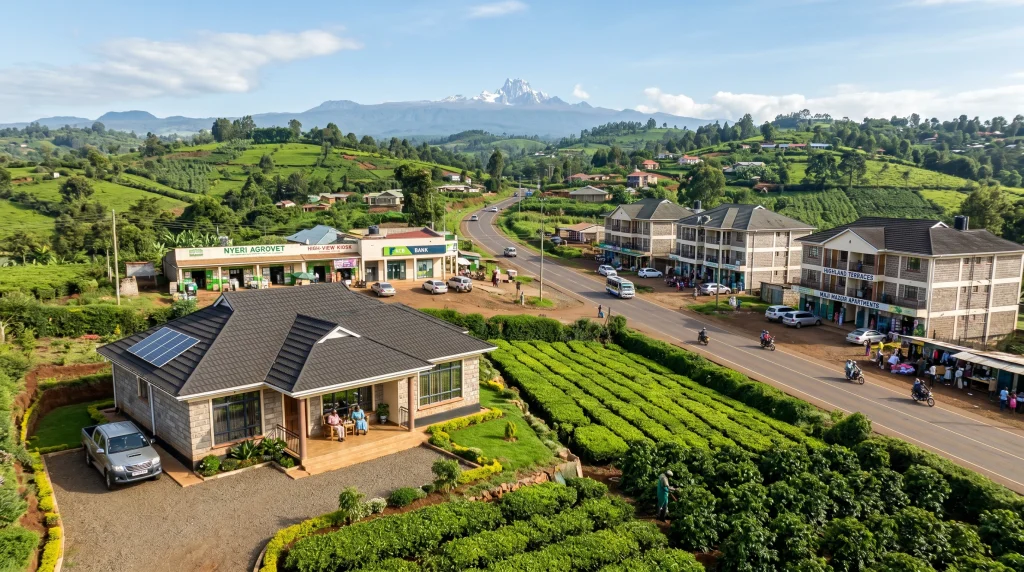
Nyeri Property Market Report 2026
The Nyeri property market in 2026 is best understood as a steady, location-sensitive market rather than a noisy speculative market. It is not behaving…
Read article
Complete Guide to Buying Land in Nyeri County:
Complete Guide to Buying Land in Nyeri Buying land in Nyeri can be one of the most practical property decisions in Central Kenya, especially…
Read article