
Post
Buying LandComplete Guide to Buying Land in Nyeri County:

Complete Guide to Buying Land in Nyeri
Buying land in Nyeri can be one of the most practical property decisions in Central Kenya, especially for buyers looking for residential plots, agricultural land, family settlement land, rental development sites, or long-term investment property. Nyeri has a strong location advantage because it sits between Mount Kenya, Aberdare ranges, major agricultural zones, growing towns, learning institutions, tourism routes, and expanding residential estates. However, buying land safely in Nyeri requires more than liking a plot, negotiating a price, and paying a deposit. The buyer must verify ownership, confirm the land status, inspect the physical boundaries, understand zoning or land use limitations, check family or succession risks, and complete the legal transfer correctly. This guide explains how to buy land in Nyeri without rushing into common mistakes. It covers what to check before paying, how to conduct due diligence, the documents required, the role of a land search, Land Control Board consent, rates and rent clearance, stamp duty, transfer registration, and practical warning signs to avoid when dealing with land sellers, brokers, family land, inherited land, agricultural plots, and subdivision projects.Why Nyeri Is Attractive for Land Buyers
Nyeri attracts different types of land buyers. Some want a residential plot near Nyeri town, King’ong’o, Ruring’u, Mweiga, Kiganjo, Chaka, Othaya, Karatina, Naromoru, Tetu, or Mukurwe-ini. Others want agricultural land for dairy farming, tea, coffee, horticulture, poultry, beekeeping, potatoes, vegetables, or mixed farming. Some investors look for plots near highways, schools, hospitals, trading centres, and tourist routes because such locations may support rental units, shops, accommodation facilities, petrol station land, storage yards, or future commercial development. The biggest advantage of buying land in Nyeri is that the county still has a mixture of urban, peri-urban, and rural land options. A buyer can find small residential plots, larger agricultural parcels, roadside plots, family settlement land, and undeveloped parcels outside busy town centres. This variety makes Nyeri attractive, but it also means that buyers must be careful because each type of land has its own risks. A town plot may have rates, zoning restrictions, access issues, or old allotment complications. Agricultural land may require Land Control Board consent. Family land may involve spouse, children, sibling, succession, or boundary disputes. Subdivision plots may depend on whether the mother title has been properly subdivided and whether individual titles are ready.Step 1: Decide the Purpose of the Land Before Searching
Before looking for land for sale in Nyeri, first define the intended use. A plot that is excellent for farming may not be ideal for rental flats. A cheap parcel far from the main road may not suit a commercial project. A beautiful hillside plot may have access, water, slope, erosion, or construction cost challenges. A roadside plot may be attractive but may also have road reserve restrictions or future expansion risks. For a residential home, consider road access, water availability, electricity connection, drainage, security, neighbourhood growth, distance from schools, and distance from markets. For rentals, check population density, nearby employers, student population, transport flow, sewer or septic suitability, and demand for bedsitters, one-bedroom units, family houses, or shops. For farming, check soil, rainfall, altitude, water access, land gradient, road access for produce, and whether the land size supports the intended activity. For commercial use, check visibility, frontage, traffic, parking space, planning approval possibilities, and whether the surrounding area can support the business. This early decision prevents emotional buying. Many first-time buyers choose land because it looks affordable, only to realise later that it is too far from services, too steep to build cheaply, too wet, too rocky, or unsuitable for the intended development.Step 2: Visit the Land Physically
Never buy land in Nyeri based only on photos, a broker’s description, a map pin, or a verbal promise. Visit the land physically. Walk around the parcel. Check the road. Confirm whether the access road is public, private, blocked, seasonal, or only promised on paper. Ask whether vehicles can reach the land during rainy seasons. Look at neighbouring developments. Check whether there are graves, crops, tenants, squatters, informal users, livestock routes, water lines, power lines, river boundaries, wetlands, or visible encroachments. Physical inspection helps you detect problems that a title deed alone may not reveal. The title may look clean, but the land may be occupied by someone else, disputed by relatives, inaccessible, located in a risky area, or different from what the seller showed you. Where possible, visit with a surveyor or a trusted local person who understands the area. For serious purchases, do not rely on one visit. Visit again at a different time of day or after rainfall, especially if the land is rural, sloping, near a river, or accessed through an earth road.Step 3: Confirm the Seller’s Identity and Authority to Sell
The person selling the land must have the legal right to sell it. Ask for the seller’s national ID or passport, KRA PIN, title deed copy, passport-size photos where required, and any supporting documents relevant to the land. If the seller is acting through an agent, insist on a written authority or power of attorney and verify it. If the registered owner is deceased, the family cannot simply sell the land casually. Succession must be handled properly, and the person selling must have legal authority through the correct court and land registration process. If the land is matrimonial property, family land, inherited land, or agricultural land occupied by a household, be extremely careful. Spousal consent, family acknowledgement, succession documents, or Land Control Board consent may be necessary depending on the situation. Many land disputes in Kenya arise because one family member sells land without the knowledge or consent of other people with a legitimate interest. Even where a title exists, hidden family disputes can delay transfer, cause court cases, or make development difficult.Step 4: Conduct an Official Land Search
An official land search is one of the most important due diligence steps. It helps confirm the registered owner, land reference details, approximate size, and whether there are restrictions, cautions, charges, caveats, or other encumbrances. Kenya’s investment procedures portal explains that a land search is normally used to confirm the real owner and check whether the title has a charge or caveat. Do not accept a screenshot, WhatsApp message, photocopy, or old search as enough proof. The search should be current. Land status can change, especially if a title is charged to a bank, involved in a dispute, restricted by court order, or under a pending transaction. Where the parcel falls under systems supported by the Ministry’s digital platform, use the official online process. Ardhisasa is the Ministry of Lands platform that allows citizens and stakeholders to interact with land information and land administration processes. After receiving the search results, compare the owner’s name with the seller’s ID. Compare the land size with what has been advertised. Check whether the title number matches the physical parcel shown to you. If the seller says the land is “clean” but the search shows a bank charge, caution, restriction, court issue, or different owner, pause the transaction until the issue is fully explained and resolved.Step 5: Verify the Title and Land Registry Records
A title deed is important, but it should not be treated as the only proof of a safe purchase. Fraudsters may use fake title copies, edited documents, old titles, titles belonging to different parcels, or genuine titles attached to disputed land. A buyer should verify the title details with official land registry records and, where appropriate, through Ardhisasa or the relevant land office process. Confirm the title number, registered owner, acreage, tenure, restrictions, and history where possible. If the land came from a subdivision, ask for the mother title details, mutation forms, subdivision approvals, survey records, and confirmation that the portion being sold is legally recognised. For plots in schemes, estates, or controlled developments, ask whether individual titles are ready or whether buyers are purchasing shares, ballots, letters of allotment, or beneficial interests. These are not the same as buying a clean individual registered title.Step 6: Use a Licensed Surveyor to Confirm Boundaries
Boundary confirmation is essential, especially in rural Nyeri, family land areas, newly subdivided parcels, and places where old beacons have disappeared. A surveyor can help identify the actual parcel on the ground and confirm whether the land shown by the seller matches the title. This protects you from buying the wrong plot, buying a smaller portion than advertised, or discovering later that part of the land belongs to a neighbour, road reserve, public land, riparian zone, or another family member. Ask the surveyor to check beacons, access roads, neighbouring parcels, and any visible encroachment. Where boundaries are unclear, involve neighbours and local administration before completing the purchase. If the seller refuses boundary verification, treats survey questions as unnecessary, or pressures you to pay first, that is a serious warning sign.Step 7: Check Rates, Rent, and Clearance Requirements
Depending on the type and location of the land, there may be land rates payable to the county government and land rent payable to the national government. Land rates are county levies charged on parcels of land, and once the rates are fully paid, a rates clearance certificate can be issued as evidence that the outstanding rates and interest have been cleared. For land rent, a land rent clearance certificate serves as evidence that outstanding land rent has been paid, and Kenya’s eProcedures portal notes that the certificate is valid for one year. Before completing a land purchase in Nyeri, confirm whether there are unpaid rates, penalties, rent, or other statutory payments. Agree clearly in the sale agreement who will pay arrears. In many transactions, the seller clears existing arrears before transfer. Do not assume that a low purchase price is a bargain until you know whether hidden arrears exist.Step 8: Understand Land Control Board Consent
Many parcels in Nyeri are agricultural land. For agricultural land transactions, Land Control Board consent is commonly required. The Ministry of Lands describes Land Control Board consent as a mandatory legal requirement for certain transactions, particularly involving agricultural land, including sales, leases, transfers, and subdivisions. This means that buying agricultural land is not complete merely because the buyer and seller have signed an agreement. The transaction must go through the required consent process where applicable. If Land Control Board consent is ignored, delayed, or mishandled, the buyer may face serious legal problems. The consent process also helps expose family objections, spouse concerns, succession issues, or unclear ownership before registration proceeds. For Nyeri buyers, this is especially important in farming zones, family settlement areas, rural subdivisions, and plots being carved out of larger agricultural parcels. Ask your advocate whether the land requires Land Control Board consent before paying the full purchase price.Step 9: Prepare a Proper Sale Agreement
A land sale agreement should not be treated as a casual receipt. It is the document that records the legal understanding between buyer and seller. It should identify the parties, title number, land size, location, purchase price, deposit, payment schedule, completion period, documents required, who pays which costs, conditions before completion, default clauses, dispute resolution, possession terms, and signatures of the parties. A good agreement should also state that the seller will provide the original title, valid search, consent where applicable, rates clearance, rent clearance where applicable, transfer documents, PIN copies, ID copies, passport photos where required, and any other documents needed for registration. If the buyer is paying in instalments, the agreement should clearly protect both sides. If the seller is to clear loans, cautions, succession issues, or family consents, those conditions should be written clearly before the buyer releases major funds. Use a qualified advocate. Do not rely only on a broker’s template, handwritten note, or verbal agreement. Land is too valuable to handle casually.Step 10: Avoid Paying the Full Amount Too Early
A common mistake among first-time land buyers in Nyeri is paying too much money before due diligence is complete. A small reservation fee or agreed deposit may be reasonable in some transactions, but large payments should come after the buyer has confirmed the title, search, seller identity, boundaries, consents, and completion documents. Where possible, use an advocate-managed process. Payment can be structured so that the deposit is paid after signing, while the balance is released after the seller provides completion documents or after transfer registration milestones are met. This reduces the risk of paying a seller who later fails to provide consent, original title, spousal consent, rates clearance, or transfer documents.Step 11: Valuation, Stamp Duty, and Transfer Registration
After the sale agreement and due diligence stage, the land transfer process moves towards valuation, stamp duty assessment, payment, and registration. The Ministry of Lands lists land transfer requirements to include an executed transfer, consent where applicable, valuation report, rent clearance, stamp duty receipt, original title, ID or passport, PIN certificate, and passport-size photos. It also indicates transfer charges and title fees, with stamp duty charged as a percentage of property value depending on the applicable category. Stamp duty should be budgeted for early because many buyers focus only on the purchase price and forget transaction costs. Other costs may include advocate fees, search fees, survey fees, valuation-related costs, consent fees, registration fees, rates clearance costs, rent clearance costs, and incidental expenses. A serious buyer should prepare a complete budget before signing the agreement. Once the transfer is registered, the buyer should receive updated ownership records and title documentation. After registration, conduct a fresh search to confirm that the land has actually been transferred into the buyer’s name. This final search is an important closing step.Common Red Flags When Buying Land in Nyeri
- The seller refuses an official land search or wants to use an old search.
- The seller’s name does not match the registered owner.
- The land shown physically does not match the title details.
- The seller pressures you to pay quickly because “another buyer is ready”.
- The land is family land, but only one family member is involved.
- The land is inherited, but succession documents are missing or unclear.
- The plot is part of a subdivision, but individual titles are not ready.
- The access road exists only verbally or passes through private land.
- The seller avoids neighbours, elders, local administration, or surveyors.
- The price is unusually low compared with nearby land without a clear reason.
- The title has a caution, restriction, charge, or caveat that is not resolved.
- The broker controls all communication and blocks direct verification.
Important Questions to Ask Before Buying
- Is the land freehold, leasehold, agricultural, residential, commercial, or mixed-use?
- Who is the registered owner?
- Does the seller have full authority to sell?
- Is there a current official search?
- Are there any cautions, charges, disputes, or restrictions?
- Does the land require Land Control Board consent?
- Are rates and rent fully paid?
- Is the access road public and usable throughout the year?
- Have the beacons been identified by a licensed surveyor?
- Are there squatters, tenants, crops, graves, or family claims?
- Is the land suitable for the intended use?
- What extra costs will be paid apart from the purchase price?
Best Areas to Consider When Buying Land in Nyeri
The best area depends on the buyer’s goal. For residential and rental potential, areas close to Nyeri town, King’ong’o, Ruring’u, Skuta, Kiganjo, Chaka, Karatina, Othaya, and major access roads may attract stronger interest because of movement, amenities, and demand. For farming, buyers often consider rural and semi-rural zones where land size, soil, water, and climate fit the intended activity. For long-term investment, emerging roadside areas and expanding market centres may offer better future value, provided the buyer verifies ownership and planning suitability. However, buyers should avoid choosing an area purely because it is trending. A good location must match purpose, budget, infrastructure, legal safety, and future development potential. A cheaper rural plot may be excellent for farming but weak for rental income. A more expensive town plot may be smaller but better for business, rental units, or resale. The right decision comes from comparing use, legal status, access, services, and total cost.Buying Land Through a Broker in Nyeri
Brokers can help buyers find land faster, especially when the buyer is not familiar with Nyeri. A good broker may know available plots, seller expectations, neighbourhood trends, and local price ranges. However, a broker should never replace legal due diligence. The buyer must still verify the title, seller, search, boundaries, access, rates, rent, consents, and transfer process. Agree on broker commission clearly and preferably in writing. Avoid brokers who demand large upfront fees before showing land, exaggerate urgency, discourage advocate involvement, or claim that official searches and survey checks are unnecessary. A genuine land transaction should remain transparent from viewing to registration.Buying Land as a Diaspora Buyer
Diaspora buyers should be extra cautious because distance creates room for misrepresentation. If you are buying land in Nyeri while outside Kenya or away from the county, do not rely only on relatives, photos, or broker videos. Appoint a trusted advocate, request official searches, use a licensed surveyor, verify the seller’s identity, and insist on proper documentation. Where a power of attorney is used, it should be properly prepared, verified, and limited to the intended transaction. A diaspora buyer should also ask for a full transaction file: title copy, search, seller ID and PIN, sale agreement, consent documents where applicable, valuation and stamp duty records, transfer forms, payment records, and final post-transfer search. Every payment should have a traceable record. Avoid sending money directly to informal intermediaries without legal safeguards.Final Checklist Before Completing a Nyeri Land Purchase
- Physically visited the land and confirmed the exact parcel.
- Verified the seller’s identity and authority to sell.
- Conducted a current official land search.
- Checked title details, acreage, tenure, and encumbrances.
- Confirmed boundaries through a licensed surveyor.
- Confirmed public access road and practical accessibility.
- Checked rates, rent, and clearance requirements.
- Confirmed whether Land Control Board consent is required.
- Used a qualified advocate to prepare or review the agreement.
- Budgeted for stamp duty, legal fees, survey costs, consent, registration, and other charges.
- Released money according to agreed completion milestones.
- Conducted a final search after transfer registration.
Conclusion
Buying land in Nyeri can be a strong investment when handled with patience, verification, and proper legal guidance. The county offers opportunities for homes, farming, rentals, commercial projects, and long-term property investment. But the safest buyer is not the one who finds the cheapest plot; it is the one who confirms ownership, boundaries, access, rates, rent, consent, title status, and transfer documents before completing payment. The best approach is simple: inspect the land, verify the seller, conduct an official search, involve a surveyor, use an advocate, confirm all clearances, understand whether Land Control Board consent applies, budget for transaction costs, and only complete the purchase when the legal transfer process is properly documented. With that discipline, buying land in Nyeri becomes less risky, more transparent, and more likely to deliver lasting value.Explore Related Areas
PFine Real Estate Cloud
Latest Articles & Market Insights
Stay current with practical property guides, marketplace updates, and real estate articles that help buyers, sellers, landlords, tenants, and investors make better decisions.
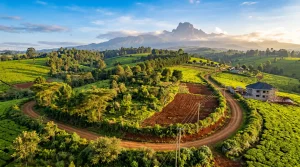
Cheap Land for Sale in Nyeri: How to Tell a Real Bargain From a Risky Deal
Searching for cheap land for sale in Nyeri can lead to good opportunities, especially for buyers with limited budgets. Affordable land can help first-time…
Read article
Houses for Sale in Nyeri: How to Inspect a Home Before Making an Offer
Looking at houses for sale in Nyeri can be exciting because a ready home gives the buyer a clear picture of what they are…
Read article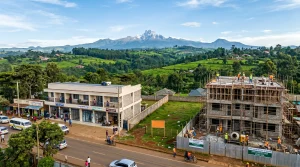
Nyeri Real Estate Investment: Property Strategies for Different Buyer Goals
Nyeri real estate investment can work in several ways depending on the buyer’s budget, timeline and purpose. Some investors want rental income. Others want…
Read article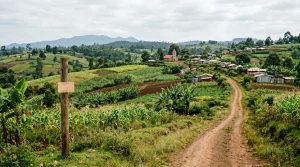
Plots for Sale in Nyeri: What First-Time Buyers Should Know Before Paying
For many first-time property buyers, plots for sale in Nyeri offer a realistic way to begin land ownership. A plot can be easier to…
Read article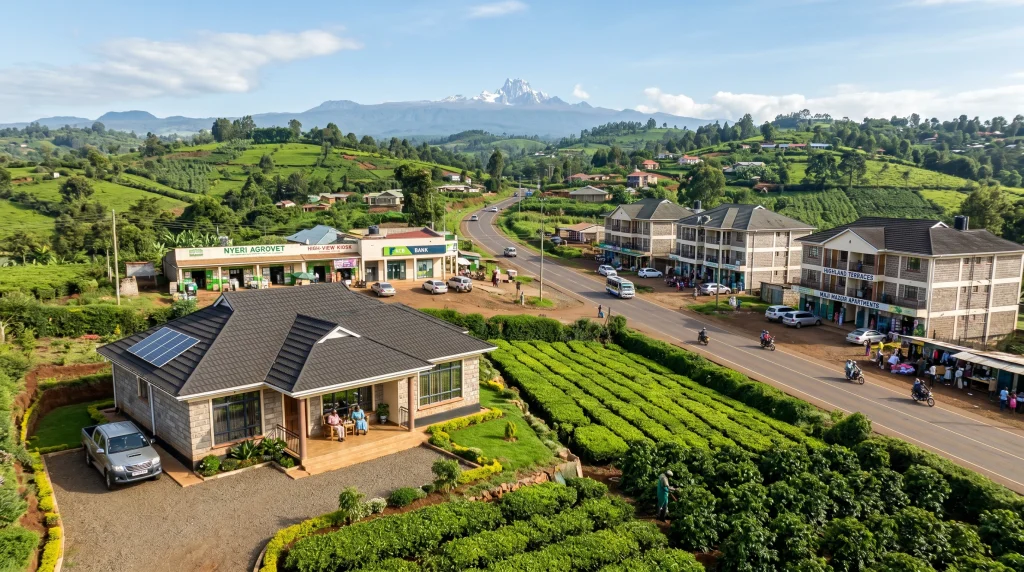
Nyeri Property Market Report 2026
The Nyeri property market in 2026 is best understood as a steady, location-sensitive market rather than a noisy speculative market. It is not behaving…
Read article
Best Places to Buy Property in Nyeri
Best Places to Buy Property in Nyeri Choosing the best place to buy property in Nyeri depends on what the buyer wants to achieve.…
Read article