
Post
Buying LandNyeri Property Market Report 2026
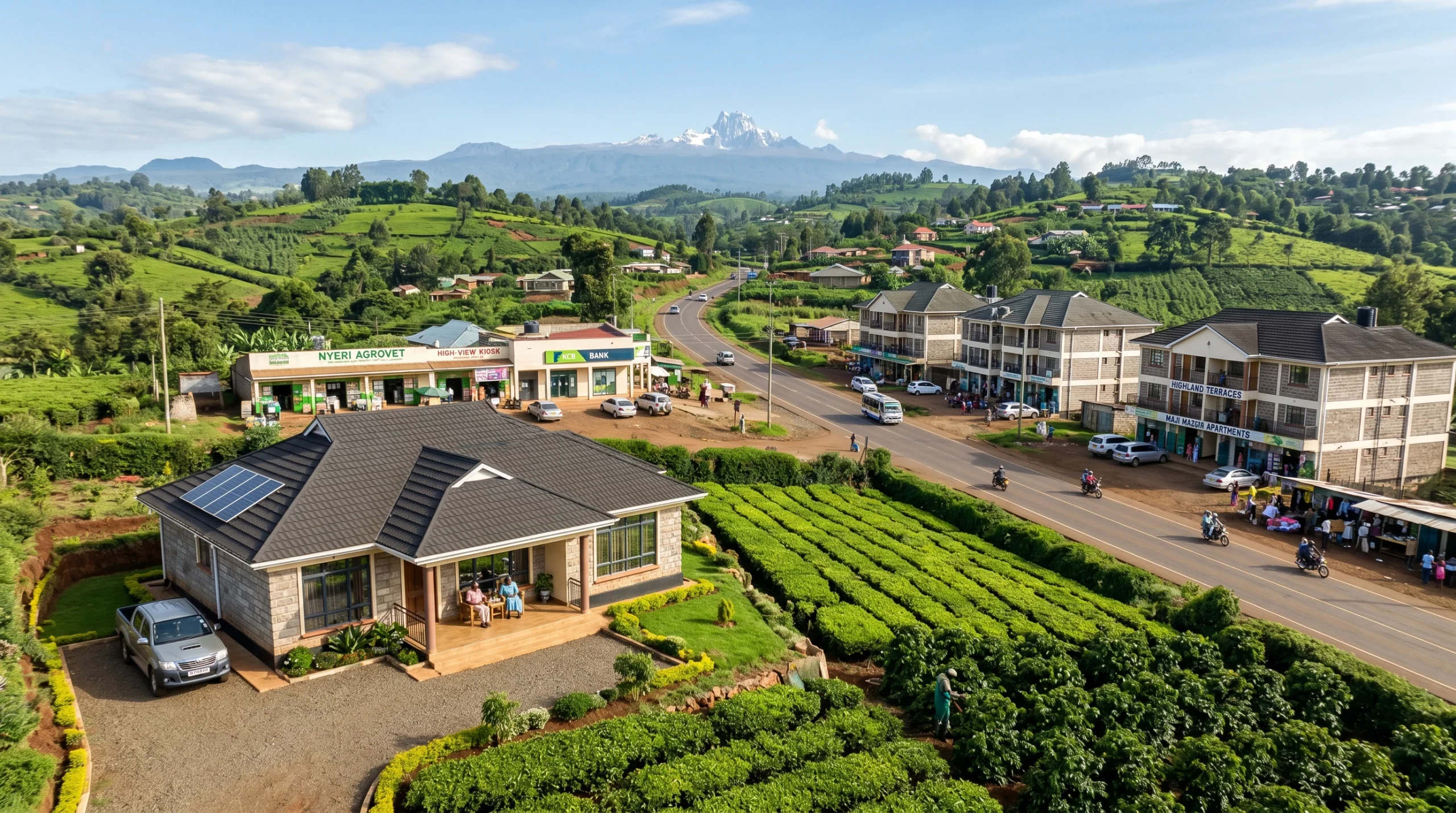 The Nyeri property market in 2026 is best understood as a steady, location-sensitive market rather than a noisy speculative market. It is not behaving like Nairobi’s high-volume apartment zones or fast-moving satellite towns where land prices can be driven heavily by large estates, expressway access, institutional financing, and aggressive developer advertising. Nyeri’s market is more practical. Demand is shaped by family settlement, agricultural productivity, retirement homes, rental housing near town centres and institutions, small commercial plots, roadside growth, and long-term land holding by buyers who want secure property in a stable Central Kenya county.This market report explains how property demand is moving in Nyeri in 2026, where buyer interest is strongest, which property types are attracting attention, what is driving land and house demand, what risks buyers should watch, and how investors can approach Nyeri property without falling for overpricing, poor access, unclear titles, or unrealistic rental projections. It is written for home buyers, land buyers, local investors, diaspora buyers, developers, agents, farmers, and anyone comparing Nyeri property with other Central Kenya markets.The most important thing to understand is that Nyeri does not have one uniform property price. Property values differ sharply between Nyeri town, King’ong’o, Ruring’u, Kamakwa, Skuta, Kiganjo, Chaka, Karatina, Othaya, Mukurwe-ini, Tetu, Mweiga, Naromoru, Kieni, and interior rural zones. A small residential plot near town may be more expensive than several acres in a drier or more remote area. A roadside plot near a growing centre may attract a premium even where surrounding agricultural land remains affordable. A fertile rural parcel may be valuable for farming but weak for immediate rental income. Therefore, the 2026 Nyeri property market rewards careful local comparison more than general assumptions.
Nyeri Property Market Overview in 2026
Nyeri’s property market in 2026 is being supported by five broad forces: urban convenience, agricultural land value, road-linked growth, institutional demand, and lifestyle settlement. These forces do not affect all areas equally. Nyeri town and nearby estates benefit from services, employment, transport, schools, hospitals, and county administration. Karatina benefits from trade and market activity. Kiganjo and Chaka benefit from road movement and growth corridor interest. Othaya, Tetu, Mukurwe-ini, Mweiga, Naromoru, and Kieni attract buyers looking for farming, homes, larger parcels, scenery, or long-term holding. The market is not purely speculative. Many buyers are end users. They are buying land to build homes, settle families, farm, retire, or hold property for children. This gives Nyeri a more grounded demand pattern than markets driven mainly by quick resale promises. However, speculation still exists, especially in advertised growth corridors and roadside areas. Sellers and brokers may sometimes price land based on future expectations rather than current utility. Buyers should therefore separate real demand from excitement. Residential property demand is strongest where people can live conveniently without sacrificing access to schools, shops, transport, hospitals, and work. This supports Nyeri town, King’ong’o, Ruring’u, Kamakwa, Skuta, and selected surrounding estates. Rental demand is strongest where tenants have a reason to live nearby: town services, institutions, offices, markets, transport, hospitals, or trading centres. Agricultural land demand remains strong where land can support real production, especially in areas suitable for dairy, coffee, tea, vegetables, potatoes, horticulture, poultry, trees, or mixed farming. Lifestyle and retirement demand is visible where buyers want calm, scenery, cooler climate, and space. Unlike some urban markets where apartments dominate investor discussions, Nyeri remains heavily land-centred. Many buyers still prefer to buy land first, then build gradually. This makes land search, title verification, boundary confirmation, and access-road checks extremely important. The buyer who focuses only on price can easily miss hidden costs such as water connection, road improvement, survey issues, slope correction, drainage, family disputes, succession complications, or land-use limitations. In 2026, the most attractive Nyeri property opportunities are not necessarily the cheapest parcels. They are properties with clear ownership, practical access, realistic use, growing demand, and reasonable total development cost. A low-price plot without water, access, clean title, or buyer demand may be more expensive in the long run than a higher-price plot in a functioning location.Main Demand Drivers in the Nyeri Property Market
The first major demand driver is urban service access. Nyeri town continues to attract people because it concentrates county services, health facilities, schools, banks, professional offices, shops, transport links, hospitality facilities, and public administration. Buyers who want convenience, rental demand, and business access continue to view the town and its nearby estates as priority locations. This supports demand for residential plots, rental buildings, townhouses, small apartment sites, office spaces, and mixed-use property. The second demand driver is family settlement. Nyeri has many buyers who want land for a permanent home, a rural family base, retirement, or future inheritance planning. These buyers may not be looking for quick profits. They want secure title, peace, access, water, social amenities, and a location they can develop gradually. This supports residential land in King’ong’o, Ruring’u, Kamakwa, Skuta, Tetu, Othaya, Mukurwe-ini, Mweiga, and other settled zones. The third demand driver is agriculture. Nyeri’s land market cannot be separated from farming. Fertile land, water access, altitude, soil, and road connection remain important for buyers interested in dairy, vegetables, horticulture, tea, coffee, fodder, trees, poultry, and mixed farming. Agricultural demand is strongest where land can produce income or support household food security. Buyers in this segment judge property differently from town investors. They care about rainfall, slope, soil depth, water, access for produce, neighbouring farm performance, and farm management costs. The fourth demand driver is road-linked growth. Areas along movement corridors, especially around Kiganjo, Chaka, Mweiga, Naromoru, Karatina, and other connecting routes, attract buyers looking for commercial visibility, future appreciation, transport convenience, and business frontage. Roadside land can perform well when it combines frontage, safe access, drainage, nearby settlement, and actual customer movement. However, road reserve and planning issues can reduce usable value, so this segment requires careful professional checks. The fifth demand driver is institutional and student-related housing. Areas close to colleges, universities, training institutions, hospitals, and public employment centres can support bedsitters, hostels, single rooms, one-bedroom units, food businesses, printing services, cyber services, and other tenant-focused property. This demand is not universal across Nyeri. It is strongest in specific pockets where students, staff, workers, and service users create repeat housing demand. The sixth demand driver is diaspora and urban-to-rural investment. Buyers living outside Nyeri, including Nairobi-based professionals and diaspora Kenyans, continue to look at Nyeri for land banking, retirement homes, family projects, farming, and long-term capital preservation. These buyers often prefer locations with clean title, accessible roads, security, and visible development. However, because they are not always present physically, they face higher fraud and misrepresentation risk.Property Types Performing Well in 2026
Residential plots remain one of the most active property types in Nyeri. They appeal to buyers who want to build family homes, retirement houses, maisonettes, bungalows, or small rental extensions. Demand is strongest where plots are close enough to services but still offer privacy, security, and manageable development costs. King’ong’o, Ruring’u, Kamakwa, Skuta, Tetu, and town-adjacent estates remain important for this segment. Buyers in this category should prioritise title cleanliness, access, water, electricity, drainage, and neighbourhood character. Rental property sites are also important, especially near Nyeri town, Karatina, learning institutions, hospitals, and busy trading centres. The strongest rental sites are those where tenants already exist or where tenant demand can be proven. Many investors make the mistake of buying land because it is near a town without checking whether tenants can afford the rent needed to recover construction costs. In 2026, rental investors should do proper rent mapping before buying. They should inspect existing rental buildings, occupancy levels, water reliability, security, transport routes, and tenant profiles. Commercial plots are performing best where there is movement, frontage, and a practical business case. Nyeri town and Karatina remain stronger commercial markets because of trade and service concentration. Kiganjo, Chaka, Mweiga, and certain roadside corridors may appeal to long-term commercial investors, but the buyer must check access approval, parking, road reserve, drainage, planning approval, and actual business demand. A commercial plot must be analysed as a business location, not merely as a piece of land. Agricultural land remains a core Nyeri asset. Farming land in areas with good soil, water, and access can be attractive to buyers seeking food production, dairy, horticulture, coffee, tea, potatoes, fodder, poultry, or mixed farming. However, buyers should avoid judging agricultural land only by acreage. One acre with water, fertile soil, and good access may be more useful than several acres with poor water, weak soil, or difficult roads. In 2026, serious farming buyers are paying more attention to water, climate reliability, access, and actual productivity. Existing houses are another segment to watch. Some buyers prefer completed homes because construction costs, supervision challenges, and contractor risks can be stressful. A finished house near services can save time, but the buyer should inspect structural quality, approvals, drainage, boundaries, water, septic system, electrical work, and title. A beautiful house on disputed land or poorly documented property is risky. Existing homes are best where the buyer can verify both the building and the land. Large parcels and lifestyle land are attractive in Naromoru, Kieni, Mweiga, and other spacious areas. Buyers may want holiday homes, eco-living, tree planting, livestock, farming, or long-term holding. The risk in this segment is romantic buying. Scenery can hide practical problems such as water scarcity, poor access, weak security, boundary confusion, or high development costs. Lifestyle land should still be evaluated with commercial discipline.Location Performance: Key Nyeri Property Hotspots
Nyeri town remains the county’s most important urban property anchor. It is best suited for buyers seeking convenience, rental demand, shops, offices, service businesses, mixed-use plots, and apartment potential. The town benefits from administration, transport, schools, hospitals, hospitality, banking, and commercial activity. However, prices are generally higher in prime sections, and buyers must check planning rules, county rates, parking, building approvals, and title history. Town property is attractive but should be bought with strict due diligence. King’ong’o continues to stand out as a residential growth area. It appeals to families, professionals, and investors seeking modern homes, secure neighbourhoods, rental units, and long-term appreciation. The strongest plots are those with practical access, water, electricity, good drainage, and a stable surrounding neighbourhood. King’ong’o may not be the cheapest option, but it offers a useful balance between town convenience and residential comfort. Ruring’u and Kamakwa are strong for town-adjacent living. They suit buyers who want access to Nyeri town without being in the central business district. These locations can support residential homes and rentals where roads, services, and security are good. The buyer should compare micro-locations carefully because one section may have better access and tenant demand than another. Skuta and other urban expansion pockets appeal to buyers seeking more affordable entry into Nyeri’s growth. These areas can offer opportunity where services are improving and settlement is increasing. However, they require patience and careful inspection. Buyers should not rely on hype. They should check whether people are actually building, whether rentals are occupied, whether roads are usable, and whether water and electricity are available. Kiganjo is a strategic area for buyers interested in road access, residential settlement, institutional influence, and long-term growth. It can suit homes, small rentals, roadside businesses, and land banking. The best plots are those with clean title, practical access, and realistic use. Roadside buyers should check road reserve and entry requirements. Chaka remains an area of interest for buyers watching road-linked development and future growth. It can suit commercial frontage, residential plots, hospitality ideas, and land banking. The key caution is overpricing based on future expectations. Buyers should compare asking prices with actual current demand, not just promotional language. Karatina is one of Nyeri’s strongest trade-driven property markets. It is suitable for commercial property, rental units, shops, storage, small apartments, and market-linked businesses. Demand is supported by daily movement and trading activity. Investors should focus on location within Karatina because commercial value can change sharply depending on frontage, access, parking, and proximity to the active market zone. Othaya, Mukurwe-ini, and Tetu are important for buyers seeking family homes, farming, retirement property, and stable rural settlement. These areas may not always deliver quick speculative profits, but they can provide lasting value when the land is productive, accessible, and legally clean. Buyers should pay close attention to succession, family consent, boundaries, and agricultural land consent where applicable. Mweiga, Naromoru, and Kieni are important for larger land, farming, tourism-linked property, lifestyle homes, and long-term holding. These areas offer space and scenery, but water, road access, soil, security, and climate conditions matter greatly. They are best for buyers with a clear land-use plan rather than buyers chasing cheap acreage.Price Behaviour and Buyer Expectations in 2026
Nyeri property prices in 2026 vary widely by location, access, land size, land use, title status, and development potential. There is no single reliable countywide price that can guide every buyer. Asking prices on open listing platforms show a wide spread, from low-cost rural parcels to higher-value residential and commercial plots near town centres and main roads. This means buyers should treat online prices as indicators, not final market truth. In many Nyeri locations, sellers price property according to future expectations. A seller near a road may price land as if the area has already fully developed. A broker may describe an area as upcoming even where services are still weak. A family selling inherited land may set a price based on emotional value rather than market demand. A developer selling subdivision plots may price based on estate branding rather than immediate infrastructure. Buyers should therefore compare asking prices with actual recent sales, neighbourhood development, access, services, and realistic use. The strongest price support is found where property has a combination of clean title, usable access, water, electricity, practical terrain, security, public transport, and real buyer or tenant demand. These factors are more important than broad location labels. A plot in a popular area but with poor access may underperform. A less advertised area with good road access, water, and real settlement growth may provide better value. For residential buyers, the key expectation in 2026 is that prime and town-adjacent land will remain competitive. Buyers with limited budgets may need to consider emerging areas, smaller plots, or locations slightly away from the town core. For agricultural buyers, prices are likely to depend heavily on productivity and water. For commercial buyers, frontage and traffic remain price drivers. For diaspora buyers, the biggest expectation should be safety and verification, not speed. Buyers should also consider total cost, not just purchase price. A cheap plot may require road opening, water connection, fencing, beacon re-establishment, drainage correction, legal work, and security improvements. A more expensive plot with services nearby may be cheaper to develop in practice. The smart 2026 buyer compares the full cost of ownership.Opportunities for Investors in 2026
The first opportunity is small rental housing near strong demand pockets. This includes areas close to Nyeri town, Karatina, institutions, hospitals, transport routes, and trading centres. Bedsitters, one-bedroom units, and compact family rentals may perform well where tenants need affordability, security, water, and transport. The investor should avoid overbuilding beyond what local rents can support. Profitability depends on disciplined construction cost, realistic rent, and high occupancy. The second opportunity is residential plots in stable growth areas. Buyers who secure well-located plots in areas such as King’ong’o, Ruring’u, Kamakwa, Skuta, Kiganjo, Chaka, and other accessible zones may benefit from long-term appreciation if services and settlement continue improving. The best opportunities are not always the most advertised estates but the plots with clean documentation, usable roads, and clear neighbourhood direction. The third opportunity is agricultural land with productive potential. Nyeri’s agricultural identity remains strong, and land that can support dairy, vegetables, fodder, fruit trees, poultry, or mixed farming can be valuable beyond resale. Buyers who understand farming may find better value in productive land than in purely speculative plots. Water access, soil, slope, and route to market are critical. The fourth opportunity is commercial property in trade and movement zones. Karatina, Nyeri town, selected Kiganjo and Chaka areas, and roadside centres may offer opportunities for shops, storage, food businesses, offices, service businesses, garages, and mixed-use buildings. The investor must test the business case before buying. Visibility alone is not enough; customers, parking, access, and permitted use matter. The fifth opportunity is lifestyle and retirement property. Nyeri’s climate, scenery, agricultural setting, and calmer environment attract people planning future homes. Tetu, Othaya, Mweiga, Naromoru, and selected rural areas can support this segment. Buyers should not compromise on access, water, security, and health-service distance because lifestyle property must remain practical. The sixth opportunity is diaspora-safe property acquisition. Investors who build a trustworthy process around title verification, survey, legal review, and transparent payments can acquire strong assets in Nyeri without being physically present all the time. The opportunity is real, but only where the buyer avoids informal shortcuts.Risks and Challenges in the 2026 Nyeri Property Market
The biggest risk is unclear ownership. Nyeri has many legitimate family and inherited land transactions, but buyers must handle them carefully. If land is family property, matrimonial property, or inherited property, the seller must have the legal authority to sell. Buyers should check succession documents, spousal consent, family awareness, and the registered owner’s details. A title search is essential, but it may not reveal every social dispute. Physical inquiry and advocate-led due diligence remain important. The second risk is boundary confusion. Old beacons, subdivisions, informal agreements, and family divisions can create boundary problems. Buyers should use a licensed surveyor to confirm the exact parcel before completing the purchase. This is especially important for rural land, newly subdivided plots, large parcels, and areas where neighbours have used land informally for years. The third risk is poor access. A plot may appear attractive but lack a public access road. Some sellers show buyers a path that is not legally recognised. Others promise that an access road will be opened later. Buyers should confirm whether the road is public, mapped, usable, and wide enough for the intended development. Without access, property value and development potential can be severely limited. The fourth risk is overpricing in growth corridors. Areas described as upcoming may attract inflated prices before services, demand, and infrastructure justify them. Buyers should not pay tomorrow’s price today without strong evidence. Compare local sales, visible construction, occupancy, road quality, water, electricity, and business activity. The fifth risk is ignoring development approvals and land use. A buyer who wants flats, shops, hostels, or commercial premises should confirm whether such development is likely to be approved. Plot size, zoning, parking, sanitation, road width, sewer or septic suitability, and neighbour objections can affect development. A property that is legally safe for a home may not automatically support a commercial project. The sixth risk is poor rental assumptions. Some investors calculate returns using optimistic rent that tenants in the area cannot pay. Before buying rental property land, inspect existing units, ask about occupancy, compare rent levels, and understand tenant needs. High construction cost and low rent can make a project unattractive even in a good location.Outlook for Nyeri Property in 2026
The outlook for Nyeri property in 2026 is cautiously positive. The county has stable demand drivers: urban services, agriculture, road-linked movement, education, trade, family settlement, and lifestyle appeal. These factors should continue supporting land and housing demand, especially in accessible and legally clean locations. However, buyers should not expect every area to rise at the same pace. Nyeri is a selective market. Residential areas near town and services are likely to remain resilient because families and professionals need convenient places to live. Rental demand should remain strongest near employment, institutions, markets, transport, and service centres. Agricultural land should remain attractive where productivity is clear, especially where water and access are strong. Roadside and corridor land may gain attention, but only the best-positioned plots are likely to justify premium pricing. The market will reward buyers who understand micro-locations. In 2026, the difference between a good purchase and a poor purchase may be only a few hundred metres: one plot may have water, access, security, and tenant demand, while another nearby plot may have drainage problems, road disputes, or weak demand. Buyers should therefore inspect each property individually instead of relying only on area reputation. For sellers, 2026 is a good year to present property professionally. Clean documentation, clear beacons, realistic pricing, photos, access details, water and electricity information, and transparent ownership records can make a property easier to sell. Sellers who overprice based on rumours may wait longer, especially as buyers become more informed. For agents, the opportunity is in trust. Buyers are becoming more careful, especially after hearing stories of fraud, double sales, fake titles, boundary disputes, and poor subdivision handling. Agents who provide accurate information, avoid pressure tactics, and support proper due diligence will stand out in the Nyeri market.Buyer Strategy for 2026
A buyer entering the Nyeri property market in 2026 should begin with purpose. The question is not simply where land is cheap, but what the land is meant to do. A home buyer should focus on access, services, security, and comfort. A rental investor should focus on tenants, occupancy, rent levels, and construction cost. A farmer should focus on soil, water, climate, and road access. A commercial buyer should focus on frontage, traffic, parking, and permitted use. A land banker should focus on clean title, growth signals, and entry price. The second strategy is to compare multiple areas before buying. Do not buy the first plot shown by a broker. Visit at least three comparable locations. Compare prices, access, services, neighbourhood growth, and risk. Sometimes a slightly higher-priced plot is better because it saves future development costs. Sometimes a less advertised area provides better value than a popular hotspot. The third strategy is to verify everything. Conduct an official land search, confirm the seller’s identity, involve a surveyor, check beacons, confirm access, review rates and rent where applicable, ask about Land Control Board consent for agricultural land, and use an advocate before paying significant money. A safe transaction is more important than a fast transaction. The fourth strategy is to calculate total cost. Include purchase price, legal fees, stamp duty, survey cost, fencing, water, electricity, road improvement, approvals, construction, and security. A buyer who ignores these costs may underestimate the real investment required. The fifth strategy is to avoid emotional buying. Beautiful scenery, broker pressure, family excitement, and fear of missing out can lead to poor decisions. Nyeri has many good property opportunities, so a buyer should not rush into a problematic parcel. If the seller refuses verification, walk away.Conclusion
The Nyeri property market in 2026 offers practical opportunities for buyers who understand location, purpose, and due diligence. It is a strong market for residential plots, family homes, farming land, rental sites, roadside commercial property, lifestyle homes, retirement property, and long-term land holding. However, it is not a market where every parcel automatically performs well. Value depends on title safety, access, services, demand, terrain, water, and realistic development potential. Nyeri town, King’ong’o, Ruring’u, Kamakwa, Skuta, Kiganjo, Chaka, Karatina, Othaya, Mukurwe-ini, Tetu, Mweiga, Naromoru, and Kieni each offer different opportunities. The best location for one buyer may be wrong for another. A rental investor needs tenant demand. A farmer needs productive land. A family needs comfort and services. A commercial investor needs visibility and access. A diaspora buyer needs a secure process. A land banker needs patience and clean documentation. The safest 2026 strategy is to buy property that has a clear purpose, verified ownership, confirmed boundaries, usable access, realistic pricing, and genuine demand. Nyeri remains one of Central Kenya’s important property markets, but the best returns will go to buyers who combine patience with professional verification.Explore Related Areas
PFine Real Estate Cloud
Latest Articles & Market Insights
Stay current with practical property guides, marketplace updates, and real estate articles that help buyers, sellers, landlords, tenants, and investors make better decisions.
Cheap Land for Sale in Nyeri: How to Tell a Real Bargain From a Risky Deal
Searching for cheap land for sale in Nyeri can lead to good opportunities, especially for buyers with limited budgets. Affordable land can help first-time…
Read article
Houses for Sale in Nyeri: How to Inspect a Home Before Making an Offer
Looking at houses for sale in Nyeri can be exciting because a ready home gives the buyer a clear picture of what they are…
Read article
Nyeri Real Estate Investment: Property Strategies for Different Buyer Goals
Nyeri real estate investment can work in several ways depending on the buyer’s budget, timeline and purpose. Some investors want rental income. Others want…
Read article
Plots for Sale in Nyeri: What First-Time Buyers Should Know Before Paying
For many first-time property buyers, plots for sale in Nyeri offer a realistic way to begin land ownership. A plot can be easier to…
Read article
Complete Guide to Buying Land in Nyeri County:
Complete Guide to Buying Land in Nyeri Buying land in Nyeri can be one of the most practical property decisions in Central Kenya, especially…
Read article
Best Places to Buy Property in Nyeri
Best Places to Buy Property in Nyeri Choosing the best place to buy property in Nyeri depends on what the buyer wants to achieve.…
Read article